
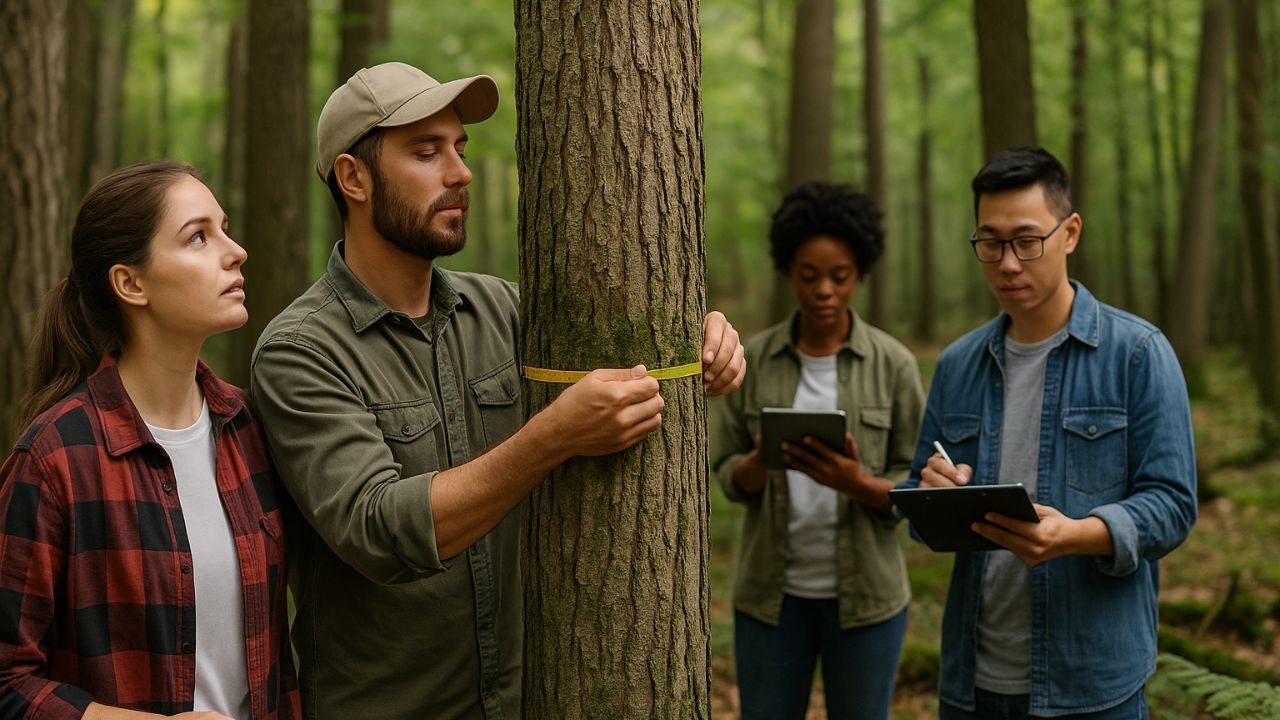
Forest Conservation –Citizen science has emerged as a powerful tool in forest research, and initiatives like the Utah Forest Dynamics Plot (UFDP) [http://ufdp.org] are leading examples of how communities and scientists can work together. UFDP is a long-term research project focused on monitoring forests, biodiversity, and ecosystem change. By involving volunteers, students, and local communities, this initiative not only gathers large-scale ecological data but also builds awareness about the importance of conservation. The role of citizen science here is twofold—first, it supports scientists by collecting extensive field data that would otherwise require immense resources, and second, it helps citizens gain direct knowledge about forest ecosystems, making them more active stakeholders in conservation.
The Role of Citizen Science in Forest Conservation
Citizen science plays a crucial role in strengthening conservation efforts by bridging the gap between communities and scientific research. When local people actively take part in monitoring wildlife, tracking tree health, or mapping biodiversity, the data becomes richer and more inclusive. Projects across the globe have demonstrated that citizen contributions can help detect invasive species, identify climate change impacts, and even prevent illegal logging. Such involvement ensures that scientific findings are not just limited to academic circles but resonate with communities whose lives depend on healthy forests.
Empowering Communities and Educating Youth
One of the most significant benefits of citizen science is its ability to empower communities, especially the younger generation. Forest conservation is not only about protecting trees but also about sustaining livelihoods, water sources, and biodiversity. Through school programs, local workshops, and online platforms, young people can be trained to observe plant species, record animal sightings, or measure carbon storage. This hands-on approach to learning creates future leaders who understand the value of natural resources and are more committed to protecting them. Moreover, when communities realize that their contributions are shaping real scientific outcomes, they feel a stronger connection to conservation goals.
Data Collection, Technology, and Long-Term Benefits
Citizen science harnesses technology to make conservation efforts more efficient and widespread. Smartphone applications, GPS mapping tools, and digital platforms allow ordinary people to collect and share forest-related data easily. For instance, community members can upload photos of tree diseases, track the migration of bird species, or record rainfall and soil conditions. This data, when analyzed by scientists, contributes to long-term research on forest health, climate adaptation, and biodiversity preservation. The collective effort of thousands of volunteers provides a dataset so vast that no single research team could achieve it alone. Over time, this leads to better forest management policies, improved early-warning systems for threats, and stronger climate resilience strategies.
Building Awareness and Shaping Policy
Citizen science is not limited to data collection—it is also a movement that builds awareness and influences decision-making. When large numbers of people are directly involved in conservation projects, they become advocates for environmental policies. Governments and organizations are more likely to respond to grassroots-level demands for stronger forest protection. Additionally, citizen-generated data provides valuable evidence for shaping national and international conservation policies. From curbing deforestation to promoting sustainable livelihoods, citizen science creates a bridge between science, society, and governance. Ultimately, this collaboration ensures that forest conservation becomes a shared responsibility rather than a task left only to scientists or authorities.